Safety First: The Non-Negotiable Rules of Qualified Remanufacturing
Introduction
For heavy-duty trucks operating under heavy loads, rough terrain and long hours, safety cannot be treated as an optional selling point or a feature to be traded off for lower cost. Many rebuild shops prioritise getting a vehicle back on the road quickly, cutting corners on hidden structural checks to reduce lead time and expense.
Under the REMAN ROAD qualified remanufacturing standard, safety rules sit above all other considerations — above cost, speed, cosmetic finish and even residual-value targets. These non-negotiable rules define the hard boundaries of qualified remanufacturing, ensuring every reset truck is fit for real-world fleet duty without hidden failure risks.
Rule 1: Safety-critical components must undergo mandatory non-destructive testing
Visual inspection is never accepted as sufficient proof of integrity for high-risk parts. Frame rails, crossmembers, axle housings, steering knuckles, kingpins and crankshafts require formal NDT before approval for reuse.
Ultrasonic, magnetic particle or dye penetrant testing identifies subsurface cracks, material discontinuities and fatigue damage that cannot be seen by the naked eye. If NDT reveals a defect outside the published repairable limits, the component is rejected immediately. No waiver, discount or customer request can override this requirement.
Rule 2: Fatigue reserve limits are fixed and cannot be extended
Every structural component has a finite fatigue life. Repeated load cycles weaken metal gradually, even when there are no visible cracks. Qualified remanufacturing follows pre-defined fatigue thresholds.
Once a part has consumed its allowable fatigue margin, it is retired from service and sent for recycling. Technicians cannot “approve it for a little longer” or adjust limits to salvage a high-value core. This rule prevents catastrophic mid-service failures that stem from accumulated cyclic stress.
Rule 3: Structural repairs must follow approved, documented engineering procedures
Welding, frame straightening and reinforcement work are only permitted under controlled, written procedures. Each repair specifies material matching, heat input limits, welding consumables, post-repair stress relief and mandatory post-repair NDT. Ad-hoc patch welding, unplanned reinforcement or field-style fixes are prohibited. Repairs must preserve the original load path and design strength; modifications that shift stress to adjacent weaker areas are not allowed.
Rule 4: Critical fasteners and sealing elements get mandatory replacement
High-torque fasteners, lock nuts, seals, gaskets and hydraulic fittings are treated as single-use items in certified reman. Even if they look intact, these parts experience micro-deformation, stress relaxation and material degradation after service.
Reusing them creates risks of loose connections, brake leaks, steering failure or loss of hydraulic pressure. Qualified remanufacturing requires grade-matched new replacements for these safety-critical consumables, regardless of visual condition.
Rule 5: System-level functional testing is required, not just individual component checks
A truck’s safety performance depends on how all assemblies work together, not only that separate parts pass inspection. After reassembly, full-system validation must be completed: brake performance testing, steering play verification, load cycling, pressure holding tests and emissions validation.
A component that works well on the bench may create a hazard once integrated with worn or misaligned mating parts. The vehicle must demonstrate coordinated, stable performance before certification.
Rule 6: Unverified prior damage or undocumented repairs disqualifies the core
Any core with a history of severe collision, prolonged overload, fire damage or undocumented structural modification enters automatic heightened scrutiny.
If the original repair records are missing and the existing work cannot be verified to meet standard requirements, the core is rejected for whole-truck reman. Unknown prior work creates unquantifiable safety risk that no amount of rework can fully eliminate.
Rule 7: Traceability must link every safety decision to the finished asset
Every safety-related inspection, test result, repair action and component replacement is logged and tied to the unique unit identifier. If a safety defect is later identified in a component batch, the traceability record enables targeted containment and notification.
Without this trail, there is no reliable way to trace risk, perform recalls or prove compliance to fleet safety managers and regulators. Safety accountability depends entirely on this permanent audit trail.
Rule 8: Safety gates stop the workflow automatically when thresholds are breached
Quality gates are hard stops. If a frame fails thickness testing, an axle fails NDT or brake performance falls outside tolerance, the unit cannot move to the next production stage. Work cannot continue around the failed assembly, and defects cannot be marked as “acceptable for customer use”. The workflow pauses until the component is either properly replaced, repaired within approved limits, or the whole core is scrapped. Safety rules override production schedules.
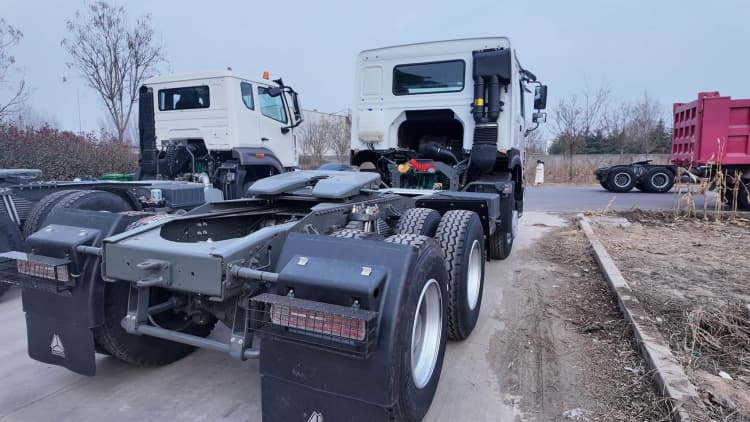
The cost of ignoring these non-negotiable rules
Workflows that skip these safeguards produce trucks that may run reliably for weeks or months, then fail unexpectedly under load. Consequences include loss of vehicle control, roadside accidents, injury, fleet downtime, liability claims and regulatory penalties.
These risks are why qualified remanufacturing carries higher upfront standards than informal overhaul. The extra testing and component replacement are not “premium add-ons”; they are safety controls.
Closing
Qualified remanufacturing’s safety rules are not best practices or recommendations — they are non-negotiable boundaries built into REMAN ROAD. Mandatory NDT, fixed fatigue limits, controlled structural repairs, mandatory fastener replacement, system testing, traceability and hard quality gates exist for one purpose: to ensure a reman truck delivers predictable safety performance equivalent to the standard’s baseline. For fleet buyers, verifying that a supplier adheres to these rules is the first and most important check before purchasing any reman truck.