Enabling Closed-Loop Circulation Through Standardised Whole Truck Reman
Intro
Whole truck remanufacturing breaks the traditional linear “take-make-dispose” model for heavy trucks. When built on unified, auditable standards, it creates a closed-loop system: end-of-life core vehicles are recovered, inspected, rebuilt, tested and redeployed instead of being scrapped. REMAN ROAD’s standardised whole truck remanufacturing workflow locks in consistent quality, full component traceability and verifiable carbon savings, turning retired haulage and construction trucks into reusable high-value assets. This closed loop delivers stable supply for fleet buyers, reduces virgin raw material demand and generates credible ESG evidence for carbon reporting.
What Closed-Loop Circulation Means For Heavy Truck Assets?
A closed loop means the truck’s material and value cycle stays within controlled industrial channels, rather than ending at scrap yards. Core trucks are collected, registered and tracked from intake, not treated as loose scrap metal. Eligible units go through the whole truck remanufacturing workflow process, then re-enter active fleet service.
When they later reach the end of their second service life, they return again to the reman network for another cycle of assessment, component harvesting or full rebuild. Standardisation is the foundation: without fixed inspection, testing and documentation rules, recovered cores become inconsistent, and the loop collapses into casual refurbishment.
How Standardised Whole Truck Reman Locks Loop Integrity?
Standardised whole truck remanufacturing workflow applies identical acceptance criteria, NDT inspection, component replacement rules and dyno / road test thresholds across every core truck. Every part that is reused, refurbished or replaced is logged against the vehicle traceability record. This removes subjective decision-making from technicians or individual workshops.
Cores that fail structural or safety benchmarks are rejected for full reman and routed for controlled material recycling only. The consistent output means fleet operators know exactly what asset they are buying, financiers can model residual value reliably, and auditors can verify that the vehicle genuinely belongs to the circular supply chain.
Reduced Virgin Material Extraction And Embodied Carbon Impact
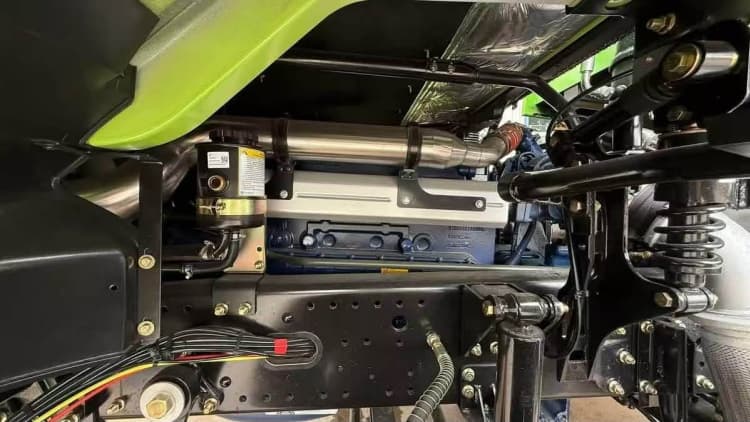
The largest carbon saving from closed-loop truck reman comes from avoiding the high emissions of mining, smelting, forging and machining new steel, castings and powertrain components. A standardised whole truck remanufacturing retains the majority of the original chassis, frame and structural architecture where metal fatigue testing confirms fitness.
Only worn, degraded or non-compliant components are swapped. Compared to manufacturing a brand-new heavy truck, this cuts embodied carbon significantly. Because the whole truck remanufacturing workflow is standardised and documented, these emission reductions are quantifiable, not just marketing claims, which supports Scope 3 inventory and corporate carbon targets.
Stable, Localised Supply Resilience For Fleet Operators
Linear supply chains for new trucks are exposed to global semiconductor shortages, component lead times and currency volatility. A mature closed-loop reman network creates a regional asset pool: usable cores are recovered locally, rebuilt to a fixed standard and released for sale.
For medium fleets, small contractors and project-based operations, this provides predictable lead times for compliant heavy vehicles. The closed-loop model also reduces reliance on importing finished new trucks, balancing fleet procurement away from global supply shocks.
Traceability Records As The Connecting Thread Of The Loop
Traceability is what separates a genuine closed-loop system from informal second-hand resale. Under REMAN ROAD whole truck remanufacturing standards, each truck carries a linked digital record covering core intake inspection, non-destructive test results, component change logs, brake and powertrain validation, warranty terms and final acceptance tests.
When the truck is resold or later returned for reprocessing, the full history travels with it. This continuous audit trail satisfies financiers, insurance underwriters, ESG auditors and tender requirements that demand proof of circular asset sourcing.
Commercial Benefits That Keep The Loop Economically Viable
Closed circulation cannot survive on sustainability alone; it requires solid commercial logic. Standardised whole truck remanufacturing lower upfront capital outlay versus new trucks, predictable maintenance schedules, fixed warranty coverage and better residual value at resale.
Lower total ownership cost encourages fleets to return their units to the reman network at the end of use, rather than selling them into unregulated grey markets. This steady backflow of qualified cores keeps the loop supplied, creating a self-reinforcing business cycle instead of a one-off rebuild service.
Boundaries: When A Core Cannot Join The Closed Reman Loop?
Standardised rules also define clear rejection gates. Cores with irreparable frame cracks, severe corrosion, crash damage beyond repair or obsolete emissions architecture that cannot be safely upgraded are excluded from full reman.
These units are not discarded carelessly: they enter controlled material recycling, recovering steel and usable sub-components while avoiding unsafe rebuilt vehicles. This boundary protection preserves the reputation of the closed-loop programme and prevents low-quality “patch jobs” from undermining the standard.
Conclusion
Standardised whole truck remanufacturing workflow is the practical mechanism to turn circular economy theory into working closed-loop circulation for heavy transport. It governs core recovery, technical validation, performance testing and traceable documentation so assets can cycle repeatedly through service.
For fleets, this means more resilient supply, lower TCO and auditable ESG progress. For the industry, it builds a sustainable alternative to the linear new-build-and-scrap model.