Lifecycle Reset Explained: The Circular Core of Certified Truck Remanufacturing
Intro
Many fleet stakeholders confuse lifecycle reset with simple overhaul or surface refurbishment. A basic repair fixes what is broken and lets the truck keep running, but it does not change the underlying uncertainty of accumulated fatigue and uneven wear. Lifecycle reset is the foundational mechanism that separates certified truck remanufacturing from all other forms of truck restoration.
It does not erase the original manufacturing date of the chassis, and it cannot delete the stress history built up in its first service life. Instead, it establishes a new, bounded performance baseline based on objective engineering testing. REMAN ROAD’s entire certification certified truck remanufacturing is built around this reset logic, making it the central operating principle of heavy vehicle circularity.
Lifecycle reset starts with a non-negotiable core eligibility gate
A certified truck remanufacturing reset cannot begin on every retired truck. The first critical step is core qualification, designed to filter out units that have already exhausted their safe fatigue budget. Service records, overload history, accident damage and corrosion exposure are reviewed before disassembly. Structural hotspots are scanned by NDT methods, and frame geometry is measured against OEM tolerance limits.
Cores with irreversible cracking, widespread deep corrosion or uncorrectable structural distortion are rejected for truck remanufacturing work and routed to responsible recycling. Only cores with verifiable residual fatigue margin move forward into the reset truck remanufacturing workflow. This intake gate prevents the circular system from becoming a channel for high-risk assets.
It resets system performance, not just individual broken parts
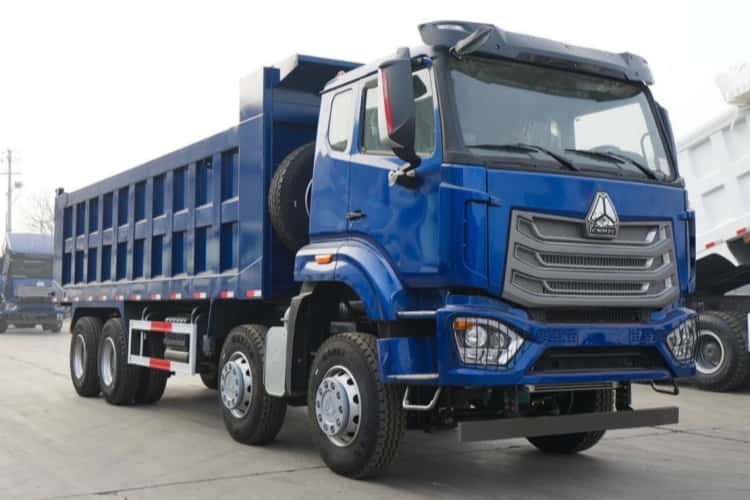
Reactive maintenance targets failed components one by one. Lifecycle reset truck remanufacturing works on the whole vehicle system. The chassis is fully disassembled, every component cleaned, inspected and sorted under the three-bucket grading rule. Mandatory renewal parts are replaced regardless of visible wear, while serviceable assemblies are machined, calibrated and bench-tested back to design specifications.
Powertrain, steering, braking and load-bearing structures are validated as a coordinated system, rather than treated as isolated parts. This system-level certified truck remanufacturing workflow eliminates random wear imbalances that cause unplanned breakdowns. After reset, the truck operates to a consistent performance standard, not just a temporary working condition.
The reset produces a duty envelope: the rule set for its second life
One of the most important outputs of lifecycle reset is a formal duty envelope. This document defines the maximum payload, cycle frequency, operating environment and inspection interval matched to the core’s remaining fatigue capacity. A Grade A core can support heavy cyclic mining and long-haul transport; lower grades are restricted to lighter, less abrasive assignments.
The certified truck remanufacturing itself does not grant unlimited service life. It quantifies what the asset can safely do and communicates those limits clearly to the fleet. REMAN ROAD makes this boundary visible to operators, maintenance teams and auditors. Circularity only remains safe when workloads are aligned with the reset’s engineered limits.
Traceability binds the reset record to the VIN for future circulation
A lifecycle reset loses most of its value once its proof is separated from the truck. If inspection reports, repair approvals and component logs stay trapped in one workshop’s internal system, the asset reverts to an unknown-risk used truck after resale. REMAN ROAD’s VIN-linked Quality Log captures the full certified truck remanufacturing workflow reset record. It stores intake screening results, NDT scans, structural repair approvals, part renewal lists and the final duty envelope.
The record transfers with ownership and persists through the second lifecycle. When the truck reaches the end of its second service window, inspectors can review this history to decide whether it qualifies for another truck remanufacturing reset or must be retired. Portable traceability turns a one-time reset into a repeatable circular event.
Lifecycle reset creates predictable depreciation and collateral value
Uncertified used trucks depreciate erratically. Hidden defects can trigger sudden write-downs that disrupt fleet financial planning. Lifecycle reset stabilises this curve by establishing a known risk profile at the point of release.
Financiers and insurers can evaluate the asset based on auditable test data, instead of relying on generic age-and-mileage valuation rules. The truck’s residual value is tied to remaining fatigue capacity and certification status, not guesswork. Fleets can build multi-year TCO models with tighter error margins. This financial stability is why certified truck remanufacturing workflow lifecycle reset is not only an engineering process, but also a financial enabler for circular fleet portfolios.
It creates a tiered circular flow, rather than a single binary outcome
The linear lifecycle has only two endpoints: continue operating or scrap. Lifecycle reset inserts a structured intermediate stage that creates multiple responsible outcomes. Qualified cores enter full reman reset and rejoin the active fleet pool. During truck remanufacturing workflow disassembly, serviceable sub-components are graded and stocked in a shared component bank for future reman builds. Parts that fail testing are recycled or disposed of properly.
When the reman truck completes its second service cycle, it faces three possible routes: re-inspection for a subsequent reset, resale to another fleet with matching duty requirements, or permanent recycling. This tiered flow maximises the use of embedded material and energy value without compromising safety.
Common misconception: reset is not “as-good-as-new” marketing
Many buyers misinterpret lifecycle reset as a claim that the truck becomes identical to a factory-new unit. This is not the case. Original virgin material carries zero accumulated fatigue, while every reman chassis retains a measurable history of stress. A responsible reset acknowledges this difference openly. It delivers defined, auditable reliability within stated limits, rather than overpromising infinite performance.
REMAN ROAD forbids vague “as new” labelling. Instead, it communicates grade, duty envelope and mandatory re-inspection requirements. Honest boundary-setting protects fleets and preserves the credibility of the whole reman category.
Final Takeaway
Lifecycle reset is the circular core of certified truck remanufacturing. It begins with strict core screening, resets system-level performance through full disassembly and standardised testing, and outputs a bounded, traceable asset with a clear duty envelope.
REMAN ROAD turns this truck remanufacturing reset from a workshop procedure into a repeatable, auditable principle that governs safety, asset valuation and cross-owner circulation. For fleet managers, the key distinction is simple: genuine circularity does not mean keeping old trucks running indefinitely. It means resetting eligible cores under measurable engineering rules, so they can circulate safely and predictably through their next chapter of service.