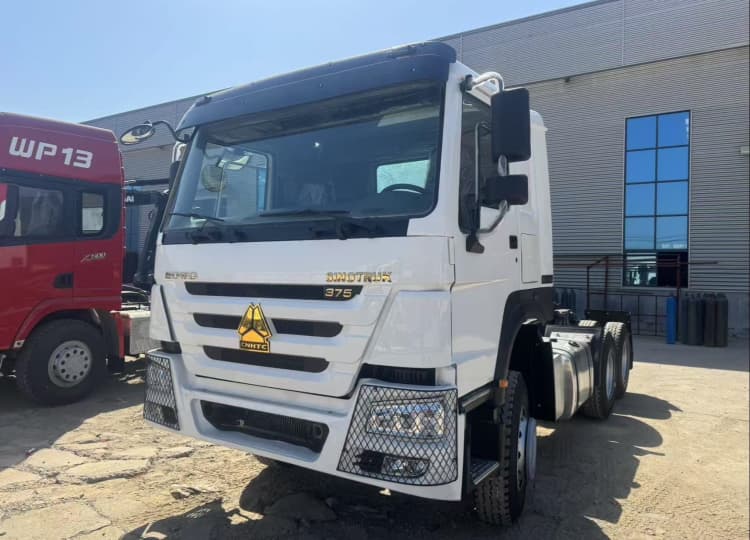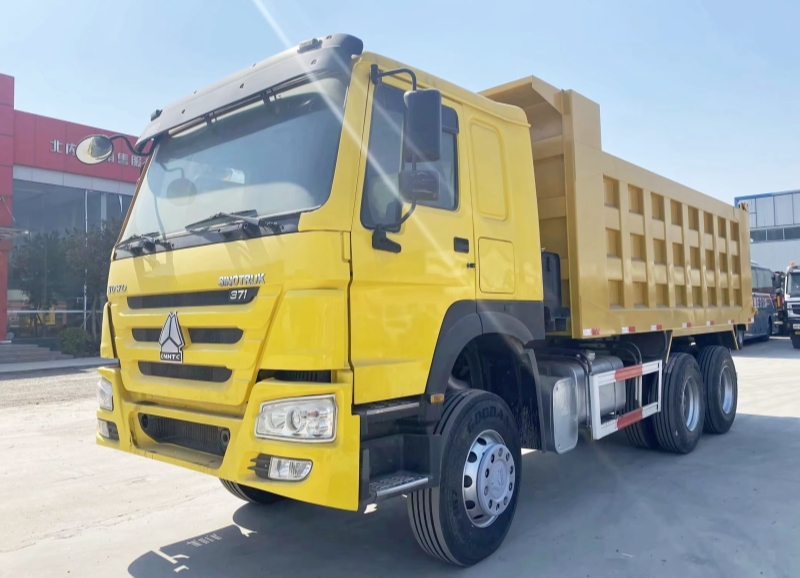
What Is the Fundamental Mission of Genuine Heavy Duty Remanufacturing?
Introduce
It is easy to reduce heavy duty remanufacturing to practical, surface-level benefits: lower upfront capital spend compared to new equipment, faster asset availability, or reduced raw material consumption. These are valid outcomes, but they are not the core mission.
Genuine heavy duty remanufacturing is not just a repair technique, nor a cost-saving procurement trick. Rooted in circular economy thinking, its fundamental mission is to extract the maximum safe, usable value embedded in qualified end-of-first-life assets, through a disciplined, system-level lifecycle reset. Supported by shared foundational logic across the ecosystem, it creates orderly, trustworthy pathways for second-life heavy assets.
To distinguish safe, viable lifecycle reset from superficial repair
The first layer of this mission is to draw a clear, engineering-backed dividing line.
In the linear market, any intervention that makes a stalled asset run again can be labelled heavy duty remanufacturing. Patch repairs, single-subsystem overhauls and cosmetic refreshes all blur the definition, creating widespread information asymmetry and hidden safety risks.
Genuine heavy duty remanufacturing’s mission rejects this ambiguity. It separates work that merely restores temporary function from work that establishes a stable, quantified second-life baseline. It starts by screening each core to confirm remaining structural margin. Only assets that pass fatigue assessment, full disassembly, component grading, system calibration and integrated loaded validation qualify for a lifecycle reset. Assets that fail this screening are channelled into alternative circular routes such as component harvesting or material recycling.
This mission protects both operators and the reputation of the whole circular sector. It prevents unsafe, short-lived patched assets from diluting the credibility of heavy duty remanufacturing.
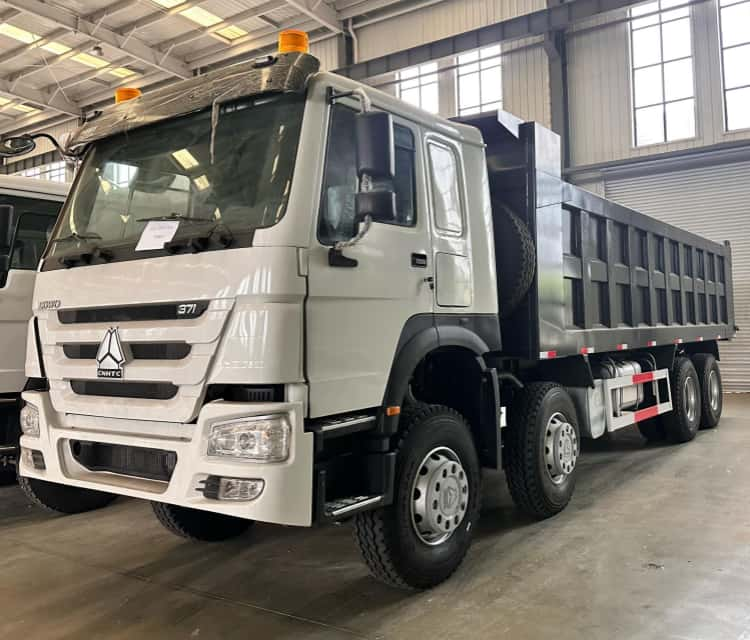
To unlock embedded residual value in a controlled, risk-bounded way
Heavy-duty assets carry massive embedded value in their castings, forgings, structural frames and precision-machined housings. Most of this value remains intact when the asset exits its first service life; failure usually concentrates on wearing consumables, seals, bearings and calibrated subsystems, not the primary load-bearing structure.
The mission of genuine heavy duty remanufacturing is to recover this trapped value responsibly. It does not attempt to erase accumulated fatigue or pretend the asset is brand new. Instead, it measures the residual safety margin, renews what must be renewed, recalibrates subsystem balance, and defines a clear operating envelope matched to the asset’s remaining capacity.
This is the critical difference between value recovery and reckless reuse. The mission is not simply to “reuse something old”, but to reuse it only within proven, safe boundaries so its remaining value can be captured reliably over a predictable second lifecycle.
To deliver system harmony, not isolated component renewal
Many rebuild activities focus on swapping out visible or failed individual parts. Even when each component passes its own bench test, unaddressed mismatches between subsystems can trigger overheating, vibration resonance, uneven braking or accelerated fatigue on structural joints.
A core part of the mission is to treat the heavy-duty asset as an interconnected dynamic system. It requires cross-subsystem alignment, calibrated control logic and full-vehicle loaded performance validation. The target is balanced, coordinated operation, not just a collection of individually functional parts.
This system-first mindset raises the reliability bar for second-life assets and reduces unplanned downtime, which is the largest hidden cost for fleet and industrial asset operators.
To build auditable evidence for shared trust across stakeholders
Heavy duty remanufacturing cannot scale sustainably if trust depends only on workshop reputation or seller promises. Asset owners, independent verification bodies, financial institutions and insurers all need consistent, objective proof to assess risk, price residual value and structure financing.
Its mission includes building a complete, traceable record tied to each asset’s unique identifier. Every fatigue scan, component grading decision, machining parameter, calibration snapshot and loaded test result is preserved and available for neutral review. This evidence closes the information gap that plagues the second-hand asset market.
When evidence is consistent and transferable, reman trucks become liquid, comparable and financeable. This turns isolated local rebuild activity into a scalable circular industrial model.
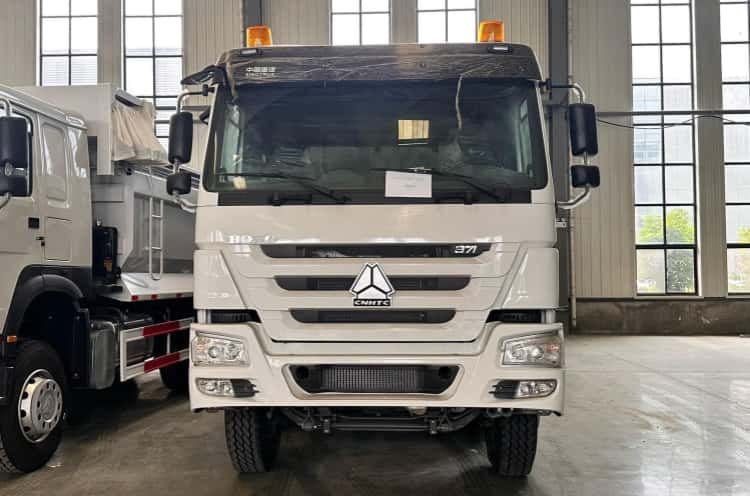
To rationalise the whole circular value chain
Genuine heavy duty remanufacturing does not stand alone in the circular economy. It sits within a sequence of pathways for retired heavy assets.
Not every core is suitable for reman. Some cores are best broken down to harvest usable spare parts; others are only fit for metallurgical recycling. A core mission of genuine reman is to act as one tier within this sorting system, sending each asset to its highest-value circular destination.
It avoids forcing uneconomical or unsafe reman on fatigued cores, just as it avoids scrapping structurally sound cores that still hold substantial usable life. This rational sorting lifts the overall efficiency of the whole circular ecosystem.
To embed realistic expectations around residual margin
A persistent market distortion is the false promise that reman trucks perform identically to brand-new units. This misleading claim leads operators to overwork reman assets beyond their approved duty envelope, burning through residual margin rapidly and causing premature failure.
Part of the fundamental mission is to anchor realistic expectations. It communicates the asset’s defined safe operating window, including payload, terrain and cyclic load limits derived from engineering testing. It clarifies that reman delivers a verified second-life baseline, not a full reset to “new” safety reserves.
This protects asset operators, preserves the integrity of reman classification, and helps TCO and depreciation forecasting stay grounded in engineering reality.
To enable long-term circular economy transformation
Beyond individual asset economics, the mission carries a broader industrial purpose.
Genuine heavy duty remanufacturing reduces reliance on virgin raw materials, high-emission primary forging and casting processes, and the energy consumption tied to manufacturing new heavy-duty equipment. When built on shared, auditable logic, these emissions savings can be documented and recognised for ESG and carbon accounting purposes.
It also nurtures a different industrial skill set: precision inspection, fatigue analysis, system calibration and traceability management, rather than only mass production. These capabilities form durable industrial infrastructure for the circular economy.
Closing thought
The fundamental mission of genuine heavy duty remanufacturing is not merely to get old trucks and equipment back on the road.
It is to safely unlock the embedded residual value of qualified cores, deliver verifiable system-level lifecycle reset, create auditable shared evidence for all ecosystem participants, and route every asset to its highest-value circular pathway. It brings order to a historically fragmented market, so the circular economy can deliver its full economic and sustainability potential.