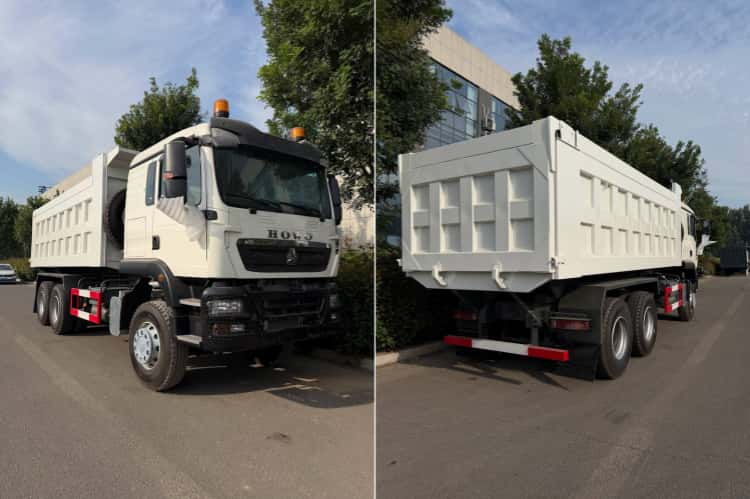
The Basic Economic Logic Behind Heavy Vehicles Remanufacturing
Introduce
Many market participants view heavy vehicles remanufacturing only through a simple lens: it costs less than buying a brand-new asset. This surface-level observation captures part of the story, but it misses the deeper economic forces that make genuine reman a viable, repeatable business model.
At its core, heavy vehicles remanufacturing is a value-recovery activity. It targets usable residual value locked inside a qualified core asset, rather than discarding the whole asset and rebuilding everything from raw materials. Under REMAN ROAD’s ecosystem framework, this logic is not limited to a single buyer or seller; it creates mutual economic benefits for all stakeholders across the circular supply chain.
The core value pool: residual embedded value within the core
A heavy vehicle is built with large amounts of high-value engineered material, forging work, machining and structural design. When the vehicle reaches the end of its first service life, most of its structural mass and load-bearing geometry may still retain usable integrity. The failure is usually concentrated in specific wearing subsystems: seals, bearings, clutch assemblies, hydraulic packs or electronic calibration, not the entire asset.
Traditional linear economy logic treats the whole vehicle as a write-off once it cannot run reliably. That throws away the embedded value of intact frame, axles, housing castings and other fatigue-qualified structures.
Genuine heavy vehicles remanufacturing’s first economic principle is to separate “worn consumable subsystems” from “still-viable core structure”. NDT fatigue screening, dimensional inspection and component grading decide whether the core’s remaining structural margin is sufficient to support a second lifecycle. If the core passes, that trapped embedded value becomes the foundation of economic gain. If fatigue thresholds are crossed, the core is routed for component harvesting or recycling, so its value is recovered in the next best form.
This is the critical dividing line between profitable heavy vehicles remanufacturing and uneconomical cosmetic rebuilds. A core that has exhausted its structural margin cannot support a stable second life. Any money spent on repainting or replacing parts on such a core becomes sunk cost with no reliable long-term return.
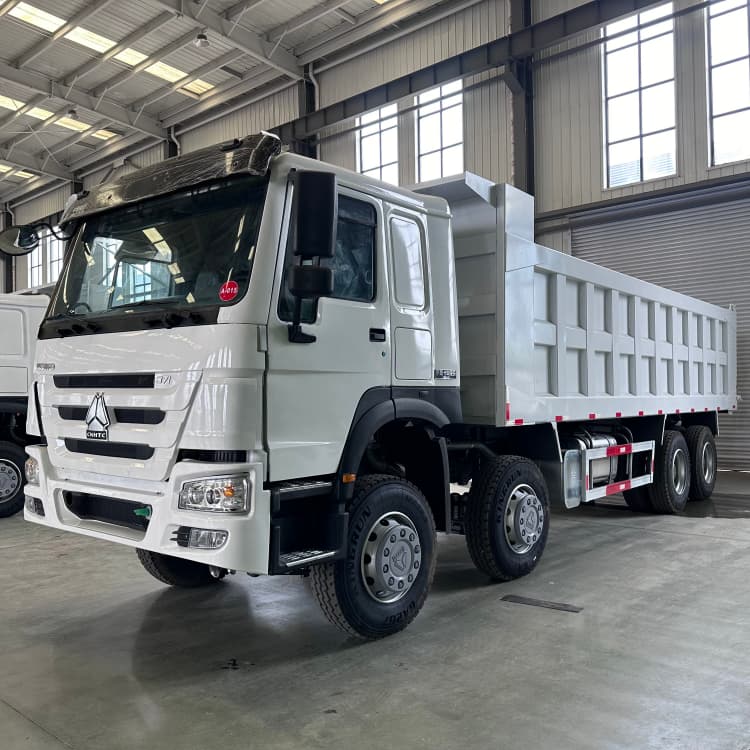
Capital efficiency: lower capital barrier versus new asset procurement
Producing a new heavy vehicle consumes massive capital, raw material input, energy and factory overhead. The bill of material includes newly mined alloy, fresh forgings, new casting cycles and full production labour.
Genuine heavy vehicles remanufacturing starts with an existing core. The capital outlay focuses on inspection, controlled regeneration, mandatory component replacement, calibration and system validation. It skips the majority of raw material and primary forming costs.
This does not automatically mean vehicles remanufacturing is always cheaper upfront. Rigorous testing, traceability documentation and independent verification add overhead. The economic advantage shows up in the structure of expenditure: capital is deployed selectively to restore the asset’s functional capacity, rather than recreating the asset from scratch.
For fleet operators, this translates to flexible capital planning. Instead of committing large lump sums to new trucks, they can allocate capital to extend the service life of qualified cores. This smooths cash flow and diversifies the asset portfolio, balancing high-value new units with predictable second-life assets.
Total cost of ownership, not just upfront price
Genuine heavy vehicles remanufacturing’s economic case stands or falls on full-lifecycle TCO, not purchase price alone.
A cheap cosmetic rebuild may look attractive at the point of transaction. But because it skips fatigue screening and system integration testing, it carries a high probability of unplanned downtime. Downtime brings lost operational revenue, emergency repair premiums, logistics disruption and contract penalties. These costs compound rapidly and erase the initial saving.
Genuine standard remanufacturing workflow is designed to reduce unplanned failure risk. The gated inspection process, loaded system validation and traceable audit trail create a predictable failure curve. The fleet can schedule maintenance in advance, forecast operating expenditure and set realistic residual value expectations for the end of the second life.
The economic trade-off is straightforward: buyers pay a premium for systematic risk reduction, in exchange for avoiding the far larger, unpredictable costs of sudden breakdowns. This predictability is especially valuable for fleets running fixed-cycle operations, such as haulage, mining support and logistics.
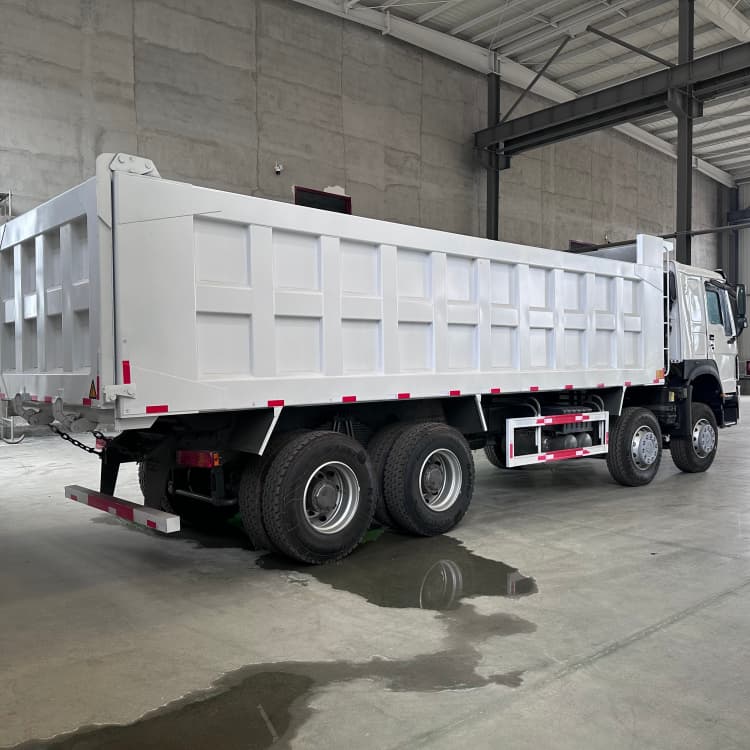
The time value of asset life and depreciation behaviour
New heavy vehicles depreciate steeply in their early years. A large share of value disappears before the asset even reaches stable operational maturity.
A properly qualified remanufactured truck resets its usable lifecycle baseline. Its depreciation curve is fundamentally different. It does not carry the steep initial depreciation of a brand-new truck. Its value decays more slowly and more predictably, tied to consumed operating hours and residual structural margin.
This creates a useful financial dynamic for asset owners. The qualified remanufactured truck holds its value more consistently through its second life. When the owner is ready to rotate the fleet, the residual value is easier to model and easier to communicate to the next buyer, financier or insurer.
This is also why traceability matters economically. Without proof of the standard remanufacturing workflow and fatigue assessment, the market cannot reliably price the asset’s remaining life. The asset becomes illiquid, and its residual value is heavily discounted.
Risk distribution across stakeholders
In a linear transaction, most risk sits with the end buyer. If a used vehicle fails unexpectedly, the fleet absorbs nearly all downtime and repair loss.
Under the collaborative ecosystem logic of REMAN ROAD, reman distributes risk across connected parties.
- Reman supplier take process risk: they invest in screening and reject unqualified cores to avoid building unreliable assets.
- Third-party verification bodies provide neutral evidence, reducing information asymmetry.
- Financial and insurance participants can price risk based on auditable records, enabling better financing terms and structured coverage.
- Fleet operators accept the known constraints of the approved duty envelope and follow scheduled maintenance.
No single party carries all uncertainty. Shared rules and shared evidence turn unknown risk into calculable risk, which is the foundation of scalable circular business models.
The boundary: when reman does not make economic sense?
Heavy vehicles remanufacturing is not universally profitable for every core. There are clear economic cut-off points.
If the core has irreversible fatigue damage, the cost to attempt a reset will never be justified by the short usable life left. If the supply of replacement components is extremely scarce or overpriced, the regeneration cost may approach the price of a new asset. If the asset type is nearing regulatory obsolescence, such as outdated emissions standards, the second-life window may be too short to recoup investment.
These boundaries are not weaknesses of heavy vehicles remanufacturing. They are part of its economic logic. Healthy circular markets do not force every core into reman. They sort cores into the highest-value pathway: full system reman, component harvesting, material recycling or direct retirement.

Wider circular economy spillover benefits
Beyond private returns for fleets and reman supplier, reman creates macroeconomic gains. It cuts demand for primary raw materials, reduces energy consumption associated with primary manufacturing, and concentrates industrial value in repair, inspection and precision engineering rather than raw material extraction.
These benefits are not just abstract sustainability claims. They become economically relevant when ESG accounting, carbon reporting and low-carbon procurement frameworks mature. Assets with a standard remanufacturing workflow can support documented emissions savings, opening eligibility for green finance, sustainability-linked contracts and responsible procurement programmes.
Closing thought
The economic logic of heavy vehicle remanufacturing rests on unlocking embedded residual value in qualified cores, deploying capital efficiently and trading higher upfront process discipline for predictable long-term operating costs.
It is not simply “buying cheaper trucks”. It is a structured way to reclassify asset value, flatten depreciation curves, distribute risk across ecosystem participants and match each core to its highest-value circular pathway. When supported by consistent evaluation logic and shared evidence, heavy vehicles remanufacturing turns fragmented second-hand asset trade into a stable, scalable economic engine for the circular economy.