
What Is Refurbished Truck? Full Breakdown & Core Differences Between Refurbished Trucks and Reman Trucks
Introduction
In the global heavy-duty truck trading market, countless fleet buyers often mix up refurbished trucks and reman trucks, mistakenly regarding them as identical second-hand vehicle renovation modes. In fact, these two restoration methods differ drastically in production depth, technical standards, internal processing logic, driving safety, long-term operating stability and after-sales protection.
Many overseas contractors suffer huge economic losses because they bought superficially shiny refurbished trucks that broke down frequently on mining and construction sites.
This article first clearly defines what is refurbished truck? Elaborates its complete working flow and inherent drawbacks, then conducts a comprehensive horizontal comparison with standardized reman trucks, helping you accurately distinguish the two products and avoid procurement traps.
What Is Refurbished Truck?
A refurbished heavy truck for sale refers to an ordinary used heavy truck that only undergoes superficial cosmetic renovation and targeted partial fault repairs, without systematic overall overhaul and industrial reconstruction.
The core goal of truck refurbishment is simply to make the vehicle look intact and drive normally for a short period, rather than restoring internal mechanical performance and structural strength to original factory standards. It belongs to shallow maintenance and cosmetic finishing work, not formal industrial vehicle regeneration.
The core goal of truck refurbishment is simply to make the vehicle look intact and drive normally for a short period, rather than restoring internal mechanical performance and structural strength to original factory standards. It belongs to shallow maintenance and cosmetic finishing work, not formal industrial vehicle regeneration.
Complete Standard Workflow of Ordinary Refurbished Truck
- Simple whole vehicle cleaning: Wash away surface mud, dust and oil stains accumulated during previous operation; clean the cab interior roughly.
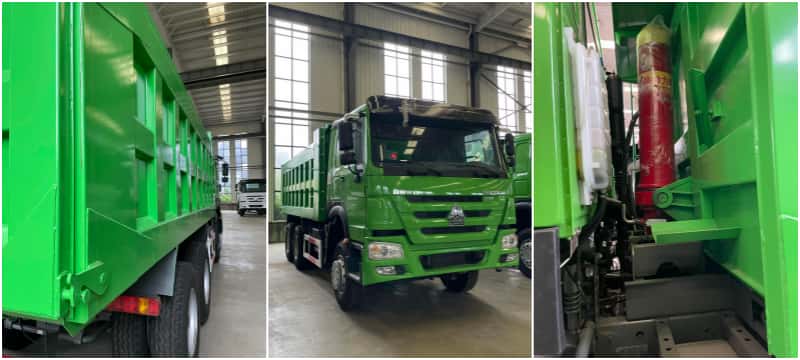
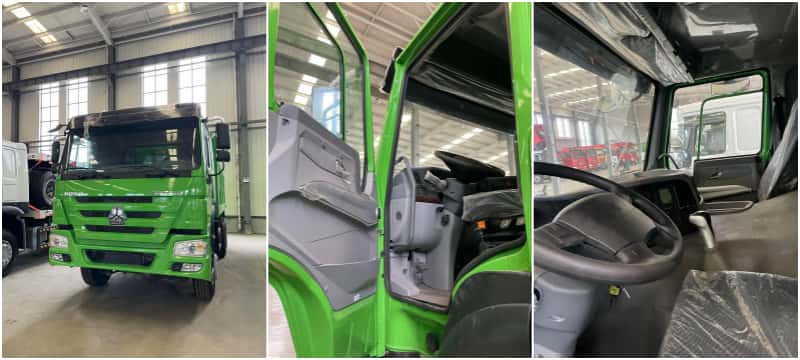
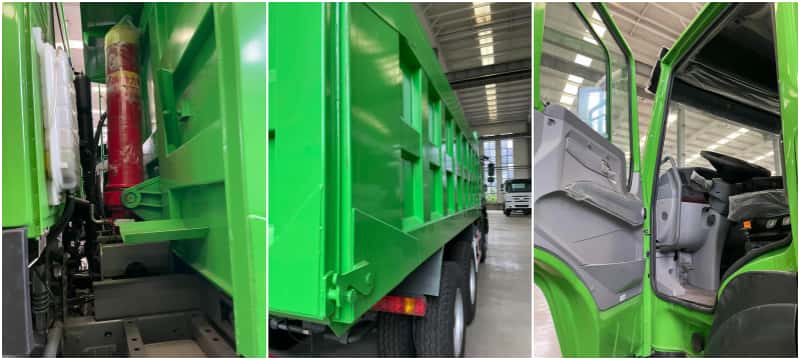
- Exterior cosmetic treatment: Polish body scratches, fill small dents, spray new paint on the whole carriage and chassis to cover rust and wear traces, making the vehicle look brand new visually.
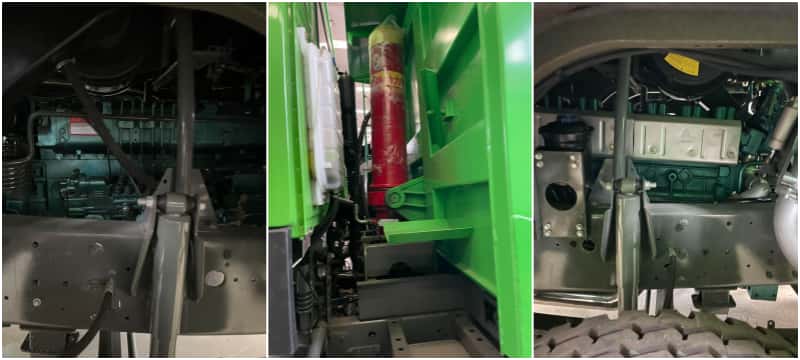
- Repair only obvious malfunctions: Technicians only fix faults that directly prevent driving, such as broken lamps, burst hoses, failed starters and serious oil leakage points. Hidden wear and aging inside core assemblies will not be touched.
- Minor replacement of damaged vulnerable parts: Only replace severely broken small accessories; most aging bearings, sealing rings, suspension components and brake consumables are retained for continued use.
- Brief road trial run: A short-distance simple test drive to confirm no obvious driving faults, then the truck can be listed for sale directly.
Typical Characteristics of Refurbished Heavy Truck
- Appearance is neat and attractive, with no obvious old traces;
- Basic driving functions are temporarily normal, but numerous hidden mechanical hazards are retained inside;
- No unified production specifications, construction quality completely depends on workers’ personal experience;
- No complete inspection archives, basically no formal after-sales warranty service.
Core Inherent Disadvantages of Refurbished Trucks
Hidden structural risks cannot be eliminated
Refurbishment never carries out non-destructive flaw detection on the frame, longitudinal beams and load-bearing structures. Fatigue cracks, chassis torsion and beam deformation formed by long-term heavy-load transportation are completely ignored.
These hidden dangers will gradually expand under continuous full-load bumpy driving, easily triggering cargo tilting, frame fracture and serious traffic accidents.
Power performance declines rapidly after delivery
The engine, gearbox, drive axle and hydraulic system are not fully disassembled and overhauled. Internal cylinder wear, gear clearance enlargement and pressure attenuation still exist.
Within 3 to 6 months of field operation, problems such as insufficient power, excessive fuel consumption, shifting jitter and repeated oil leakage will emerge continuously, resulting in frequent downtime losses.
Cumulative maintenance costs are extremely high
Although the initial purchase price is cheap, refurbished heavy trucks need repeated replacement of vulnerable parts every month. The accumulated maintenance expenditure plus project delay losses far exceed the price gap between refurbished trucks and remanufactured trucks.
No quality traceability and after-sales guarantee
No disassembly records, flaw detection reports or parts replacement lists are archived. Once mechanical failures occur after purchase, buyers have to bear all repair costs themselves with no after-sales channels available.
Key Differences: Refurbished Trucks and Reman Trucks
Production Nature & Process Depth
Refurbished Trucks —— Shallow cosmetic maintenance, partial disassembly only for faulty positions. The vast majority of original vehicle components are retained; the whole process has no unified international industrial standards, belonging to informal workshop-level renovation.
Standardized Reman Trucks —— Formal industrialized whole-vehicle reproduction complying with ISO international remanufacturing specifications. The entire REMAN ROAD reman heavy truck for sale is completely disassembled down to each bolt; all parts are cleaned, inspected, repaired or renewed one by one, then reassembled strictly according to OEM assembly torque and sequence standards.
Processing Scope of Core Components
Refurbished Heavy Truck —— Only repair faulty parts; aging, fatigued components that have not failed are all reused. Engine, transmission, brake and hydraulic systems are not comprehensively calibrated.
Reman Heavy Truck for Sale —— Mandatory full overhaul of all core assemblies: replace all oil seals, bearings, friction plates and aging wiring harnesses; recalibrate engine power, hydraulic pressure and braking balance to restore OEM rated parameters completely.
Structural Safety Treatment
Refurbished Heavy Trucks —— No frame crack detection, no deformation correction or structural reinforcement; load-bearing hidden dangers exist permanently.
Reman Truck for Sale —— Magnetic particle & penetrant non-destructive testing for all load-bearing structures; cracks are welded and repaired, deformed beams are precisely corrected, and stress concentration areas are reinforced to eliminate all safety hazards.
Factory Testing Standards Before Delivery
Refurbished Trucks —— Only short-distance simple test drive to confirm basic drivability, no full-load durability inspection.
Standardized Reman Trucks —— 72-hour uninterrupted full-load simulated working condition tests, including uphill climbing, repeated unloading, continuous braking and off-road circulation tests. Only vehicles with all performance indicators reaching new truck standards can pass factory acceptance.
Quality Archives & After-Sales Service
Refurbished Trucks —— No complete quality documents, zero official warranty; all post-purchase risks borne by buyers.
Reman Heavy Truck for Sale —— Full digital traceable archives covering the whole remanufacturing process; global unified official warranty for engine, gearbox, drive axle and other core assemblies.
3.6 Service Life & Long-Term Cost Performance
Refurbished Trucks —— Stable service life is only 1~2 years; failure rate surges sharply later, comprehensive operating cost is the highest in the long run.
Standardized Reman Trucks —— 90%~95% service life of brand-new trucks, stable operation for 5~7 years under harsh mining conditions; ultra-low failure rate and controllable daily maintenance expenses.
Suitable Application Scenarios for the Refurbished Trucks and Reman Trucks
Choose Refurbished Heavy Trucks Only If:
You only need temporary vehicle use within 1 year, undertake light-load short-distance sporadic transportation tasks, have extremely limited budget and accept frequent maintenance downtime losses.
Choose Standardized Reman Trucks If:
You are a mining contractor, logistics fleet operator or construction enterprise needing long-term heavy-load continuous operation; you pursue driving safety, stable turnover, capital turnover efficiency and guaranteed after-sales service. This is the most rational asset investment choice for professional fleets.
Conclusion
To sum up, refurbished trucks are merely old trucks with new paint and temporary fault repairs, whose core value is only limited to short-term basic usability.
Standardized Reman Trucks are industrially regenerated heavy vehicles restored to new-machine performance standards, balancing safety, durability, cost and after-sales protection comprehensively.
Distinguishing the refurbished trucks and reman trucks clearly can help global buyers avoid second-hand truck market traps and maximize fleet long-term operating profits.